Alright, let’s talk about masking.
What Is Masking?
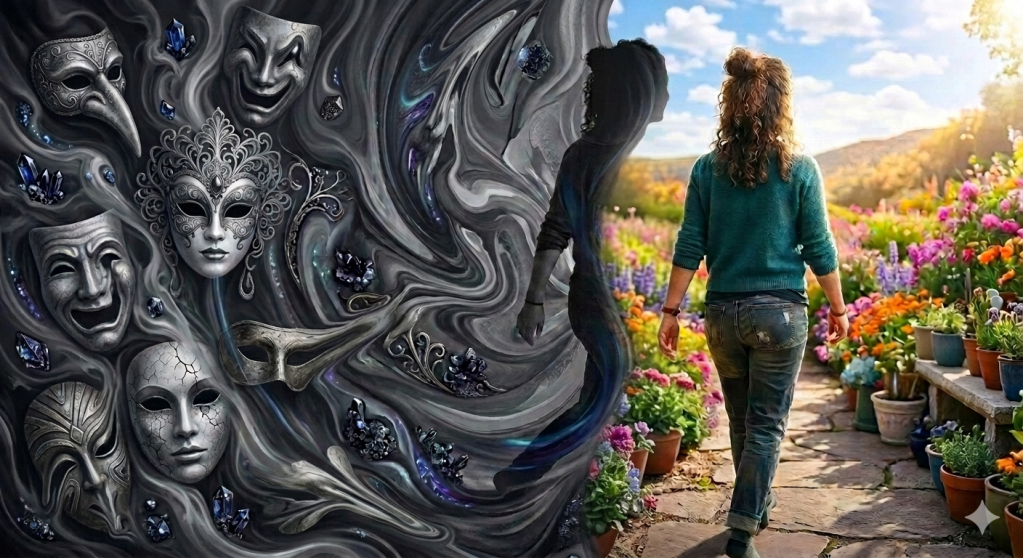
If you’re autistic, chances are you’ve been doing it your whole life, maybe without even realizing it. I didn’t. I just thought I was really good at adapting. Masking is basically when autistic people consciously or unconsciously hide parts of themselves to fit social expectations.
Honestly, I spent years trying to be the perfect version of “normal.” Which is hilarious now, because I’ve finally realized there is no such thing as normal. Everyone masks to some extent. People have their “friend” mask, their “job interview” mask, their “meeting the in-laws” mask. The version of you in Vegas with your friends is probably not the exact same version showing up at a serious business meeting pretending to know what “synergy” means.
When Masking Becomes Survival
The difference is autistic masking often goes way beyond that. For me, it was survival.
I could jump between groups like a social chameleon. Sports team? Nailed it. Top grades? Yep. Party girl? Oh, absolutely. But looking back, it felt less like being myself and more like method acting.
Costume. Script. Rehearsed lines. Cue the awkward fake laugh.
It wasn’t until a couple years ago, and yes, I’m 42 now, that I was intensively diagnosed:
Autistic.
Which honestly explained… basically everything.
Looking back, I had different versions of myself for different people. It wasn’t fake because the personalities were all still me. But they were edited versions. Carefully filtered versions. Socially acceptable versions.
I rehearsed everything.
- How to talk
- How long to make eye contact
- How to laugh without sounding weird
- How to stand
- How to exist without attracting attention
The Exhaustion of Performing Normal
Apparently there are all these unspoken social rules everyone else just magically understands. Meanwhile I’m over here trying to calculate the correct amount of eye contact like it’s a hostage negotiation.
Too much eye contact? Creepy.
Too little? Suspicious.
Perfect amount? Who knows. Apparently neurotypical people are born with this information pre-installed.
And small talk? Absolutely not.
“How about this weather?”
Sir, I do not care about the weather. I care about why grocery stores rearrange aisles without warning and how spreadsheets are unfairly underrated.
Masking is basically showing up to social situations pretending everything feels natural when internally you’re running a full emergency operating system.
You nod at the right moments. Smile on cue. Throw in a “haha totally” every few minutes so people know you’re alive. Meanwhile your brain is busy replaying every sentence you’ve said since 2007.
- Did I sound rude?
- Too excited?
- Too monotone?
- Was that joke weird?
- Was that hug too long?
- Did I accidentally beep boop like a malfunctioning robot during conversation?
And the wild part is people often think you’re okay socially.
Meanwhile you leave the interaction mentally, emotionally, and physically exhausted like you just completed customer service during Black Friday.
Because masking is exhausting.
It’s not just pretending to like small talk or forcing eye contact. It’s wearing a mask over your entire identity. After enough years, you don’t even know where the performance ends and you begin.
And honestly? That part gets lonely.
You can have friends. You can look social. But deep down, it feels like nobody fully knows you because you’re constantly adjusting yourself to match the room.
Internally? Absolutely fighting for your life in a loud restaurant while pretending you’re fine.
Learning to Unmask
But things changed for me once I started unmasking.
Not in some dramatic movie scene where I suddenly became my authentic self overnight. It was slower. Awkward. Slightly chaotic.
More like:
“You know what? I’m just going to be honest.”
And then five minutes later accidentally explaining my deep emotional connection to dual monitors.
Unmasking doesn’t mean throwing all social rules out the window and becoming a feral raccoon. It just means letting yourself exist without performing quite so hard all the time.
It means saying:
- “I’m overwhelmed.”
- “I need quiet for an hour.”
- “I actually don’t enjoy crowded places.”
- “I’m exhausted and my brain is done processing humans today.”
And surprisingly? The right people understand.
Now I have people around me I don’t fully mask with. People I can actually say things to like:
“Hey, I need an hour alone listening to music because my brain feels like 47 browser tabs playing different sounds.”
And instead of judging me, they just go:
“Okay.”
Honestly, the more I stopped performing, the more comfortable life became.
Turns out being yourself uses way less energy than trying to manually operate a human simulator 24/7.
And the funniest part? People usually like the real version of you better anyway.
What Unmasking Looks Like for Me
So here’s to unmasking.
- To stim toys
- To noise-cancelling headphones
- To accidentally info-dumping about spreadsheets, water shoes, paddleboards, or whatever your current obsession is
- To leaving events early
- To needing recovery time after socializing
- To finally realizing different doesn’t mean broken
Because at the end of the day, it’s a lot easier to exist when you stop treating your personality like a customer service job
And honestly?
I’m way less tired now, and I have people around who know and like the actual me, not just the version I thought I had to perform.
If you’re anything like me, maybe try unmasking, even just a little bit at a time. You might be surprised how much lighter life feels.