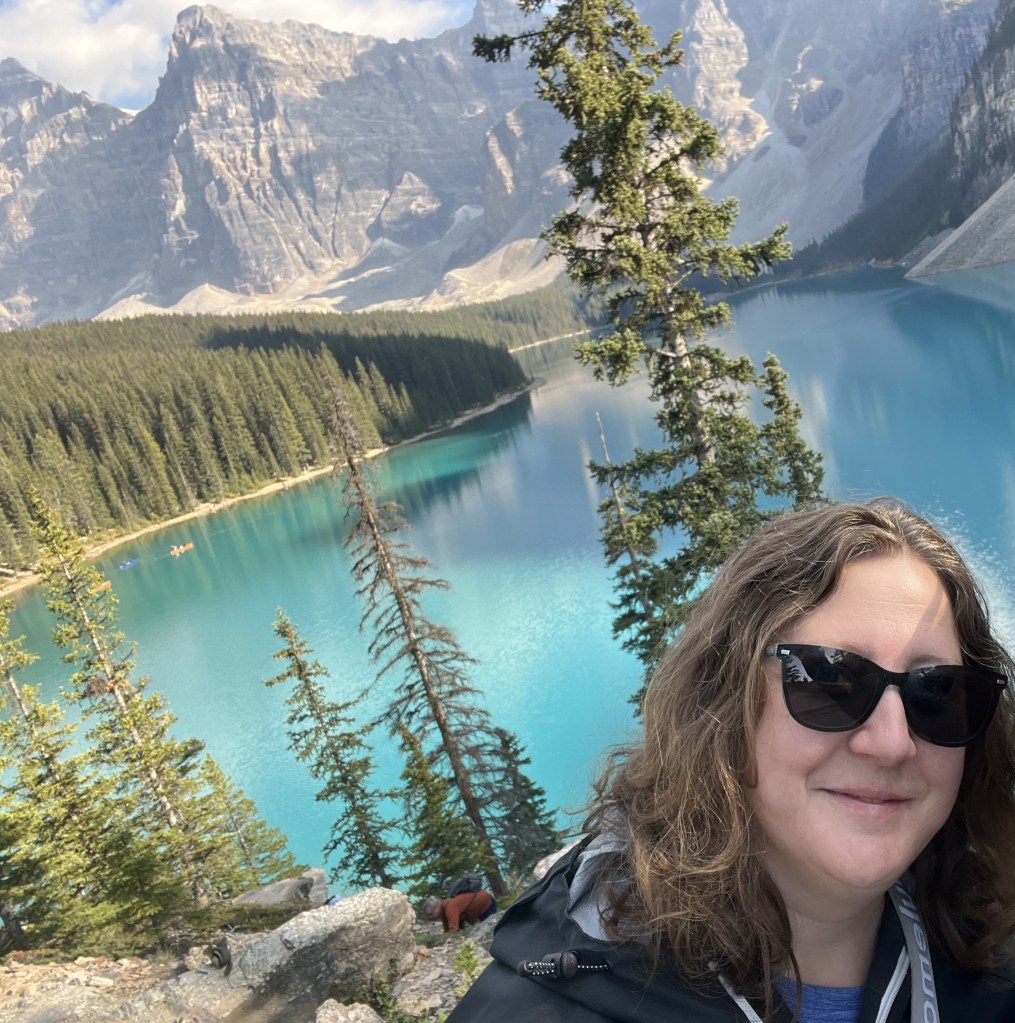
Hi, I’m Christine!
I’m a neurodivergent adventurer living in Alberta. I’m autistic, ADHD and have PTSD, I’m passionate about the outdoors — especially hiking, paddleboarding, and finding quiet, calming places that help me feel grounded.
I was diagnosed with ADHD after graduation, and autism — way after, when I was already an adult trying to make sense of why life always felt a little more complicated for me than everyone else.
Growing up, I was considered “gifted” (which, if you know, you know — it’s not nearly as glamorous as it sounds). I remember purposely failing tests sometimes, calculating exactly how many questions to get wrong so I could avoid ranking highest grades in the class . Just to avoid the awkward, public “congratulations” I didn’t want the attention. I just wanted to be left alone to quietly be good at things.
Despite a few… interruptions (like getting suspended and kicked out of school — oops), I went on to college where I absolutely crushed it, winning awards and academic honors. And if you think I enjoyed that recognition? I did not. At all.
Praise has always felt more like pressure than celebration.
I was athletic, had friends and went out, people were very exhausting. Even while playing sports and being “part of things,” I constantly felt like I was watching life through a window. Close enough to see everything happening, but never quite inside. It always seemed like there was some invisible rulebook everyone else had read and I somehow missed. ADHD didn’t seem to fully explain what I was experiencing and feeling.
A year ago at 40 years old, everything finally clicked when I was diagnosed with Autism.
Telling my closest friends was terrifying — but when I finally built up the courage, their reaction was basically:
“Yeah, that actually makes a lot of sense.” (Thanks for the heads-up, guys.)
Telling those who didn’t truly know me, I often get very different reactions. The classic one? “You don’t look autistic.” Which is funny, because apparently there’s some official “autistic face” I missed the memo on? Then there’s the ever-popular “Are you sure?” Like, yes, I’m sure — I didn’t just take some random ‘What kind of sandwich are you?’ quiz online and decide to call it a diagnosis. This was after hours and hours of testing, mountains of paperwork, and enough questions to unlock a few new traumas. Certified. Stamped. Framed.
But honestly, I still only share my diagnosis with the people I have to or really trust. And I guess those reading this.
I survived by reading, researching, and being outdoors. Nature was my safe place — I could go out to bars or busy places when I needed to, but I always needed to recenter myself with a long walk or some time outside. Living with autism means navigating a world that’s often overwhelming — from bright lights and loud noises to the endless social rules that no one ever explains. Small things that seem invisible to most can feel huge to me, like a buzzing light or an unexpected touch. I’ve learned to read these signals and find ways to manage them, but it’s a constant balancing act. Nature grounds me, giving me space to breathe and recharge, which has been crucial for my mental health.
Then, in a total fluke accident (not even from anything intense!), I tore my calf. Everything changed. I lost my best coping tools, and suddenly, I was couch-ridden — stuck, overwhelmed, and trying to figure out how to survive without the things that made life manageable.
Beyond the sensory challenges and classic autistic traits, I also found myself physically struggling with everyday tasks. That’s when I really started noticing the broader aspects of accessibility—and realized how much I’d taken those parts for granted.I’m familiar with all the typical autistic traits: heightened sensitivity to sounds, buzzing lights, sensory overload, and communication hurdles. But the practical details—like how far the parking lot is from an event, how many stairs I’d have to climb, or whether there are obstacles on the path—those never even crossed my mind before.
After months of sulking, resenting my injury, and throwing myself the world’s longest pity party, it finally clicked: maybe I should stop whining and just do what I love. So, being the research nerd that I am, I grabbed my laptop, dove into accessibility rabbit holes, and turned my frustration into a full-blown mission. Staying home just wasn’t an option—I needed to keep living my life. That’s where the idea for this blog sparked. I figured if I’m going through this, maybe others are too, and all this research could be genuinely helpful. Because honestly, everyone deserves to enjoy the world around them.
I’ve got a million ideas, blog posts, and plans swirling in my head—but rarely get around to writing them down or following through.
That’s where Tanya comes in.
If I’m the whirlwind, Tanya’s the one holding the map. She’s my built-in GPS, sensory translator, emotional anchor, and the person who patiently answers the same question five different ways when I’m stuck in a mental loop. She helps me stay focused, organized, and somehow manages to turn my tornado of ideas into actual plans — which, if you know anything about PDA and ADHD, is a full-time job. I have the attention span of a raccoon on Red Bull, and she wrangles that chaos into something real. Tanya walks beside me when crowds are too much, helps remind me of tools to use, and reminds me to do basic human things like eat and hydrate. She’s not just part of this journey — she’s the reason alot of it even happens.
It was time to finally start typing out the chaos in my head — to take the million ideas I’ve been mentally sorting like a human spreadsheet and actually write them down. I’ve always found comfort in explaining things, researching, and sharing what I’ve learned. There’s something calming about getting my thoughts out — they buzz just as intensely as bright lights or loud sounds, and writing helps me untangle the static.
But the idea of pictures? Video? Being on screen? Absolutely terrifying. As an autistic person, I struggle with eye contact, smiling on cue, and showing emotion in ways people expect. I’ve legit googled “how to smile naturally” and practiced selfies like it was an Olympic sport.
Luckily, I have a secret weapon. Or rather, Tanya does.
Meet Bentley — her majestic, ridiculously photogenic pug. This little guy is an instant Instagram star. He’s got perfect eye contact (especially if you’re holding snacks), a signature look that screams “I woke up like this,” and a personality that somehow mirrors my own autistic traits: he likes his routine, gets overstimulated easily, and isn’t afraid to throw a dramatic side-eye when things get weird.
Honestly? He gets me.
Bentley makes it easier. He lightens the pressure, steals the spotlight, and brings a whole lot of joy to this journey — one adorable squishy face at a time.
 NeuroExplorer